
Morning vs. Evening Medications: Why Timing Becomes a Habit Problem
Splitting a schedule across morning and evening doses changes the habit-design problem. Here is how to handle it well.
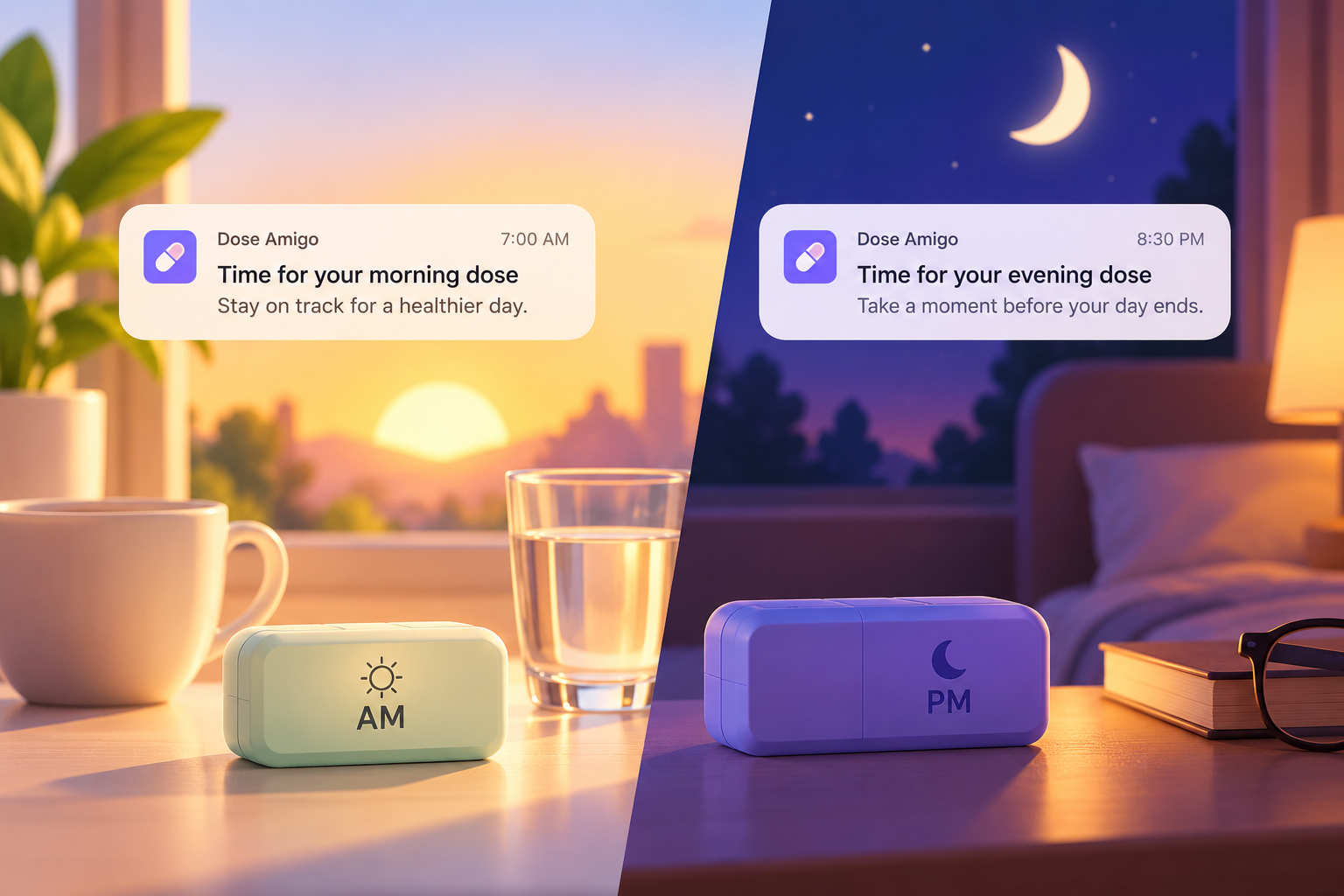
A single daily dose is a fairly simple habit to build. The moment a schedule splits into a morning dose and an evening dose, you are no longer managing one habit — you are managing two, and they tend to fail in different ways.
Mornings fail from rushing
Morning routines are usually time-boxed and a little chaotic: getting ready, getting out the door, getting kids to school. A morning dose that is not tightly anchored to an existing step in that routine — brushing your teeth, making coffee — is easy to skip in the rush.
Evenings fail from forgetting entirely
Evening doses have the opposite problem. There is less external pressure, more variability in when “evening” actually happens, and a much higher chance the day simply ends — with a movie, with falling asleep on the couch — before the reminder was ever acted on.
Why one reminder style does not fit both
A single generic “take your medication” alert does not account for the fact that a 7:00 AM reminder needs urgency and brevity, while a 9:00 PM reminder benefits from being set earlier in the evening, before the day’s momentum fully winds down.

What works for split schedules
- Separate, clearly time-of-day-labeled reminders — Morning and Evening should feel like distinct moments, not one long list.
- Anchor each to something that reliably happens at that time of day.
- Give the evening dose a slightly earlier nudge, since evenings compress faster than mornings.
- Review both halves together, weekly — a strong morning streak can mask a weak evening one if you only look at the daily total.
How Dose Amigo handles this
Dose Amigo separates schedules by time of day by default — Morning, Afternoon, Evening, and Bedtime — with independently timed reminders for each, so a split routine gets treated as the two distinct habits it actually is, not one blurred-together task.
Related reading
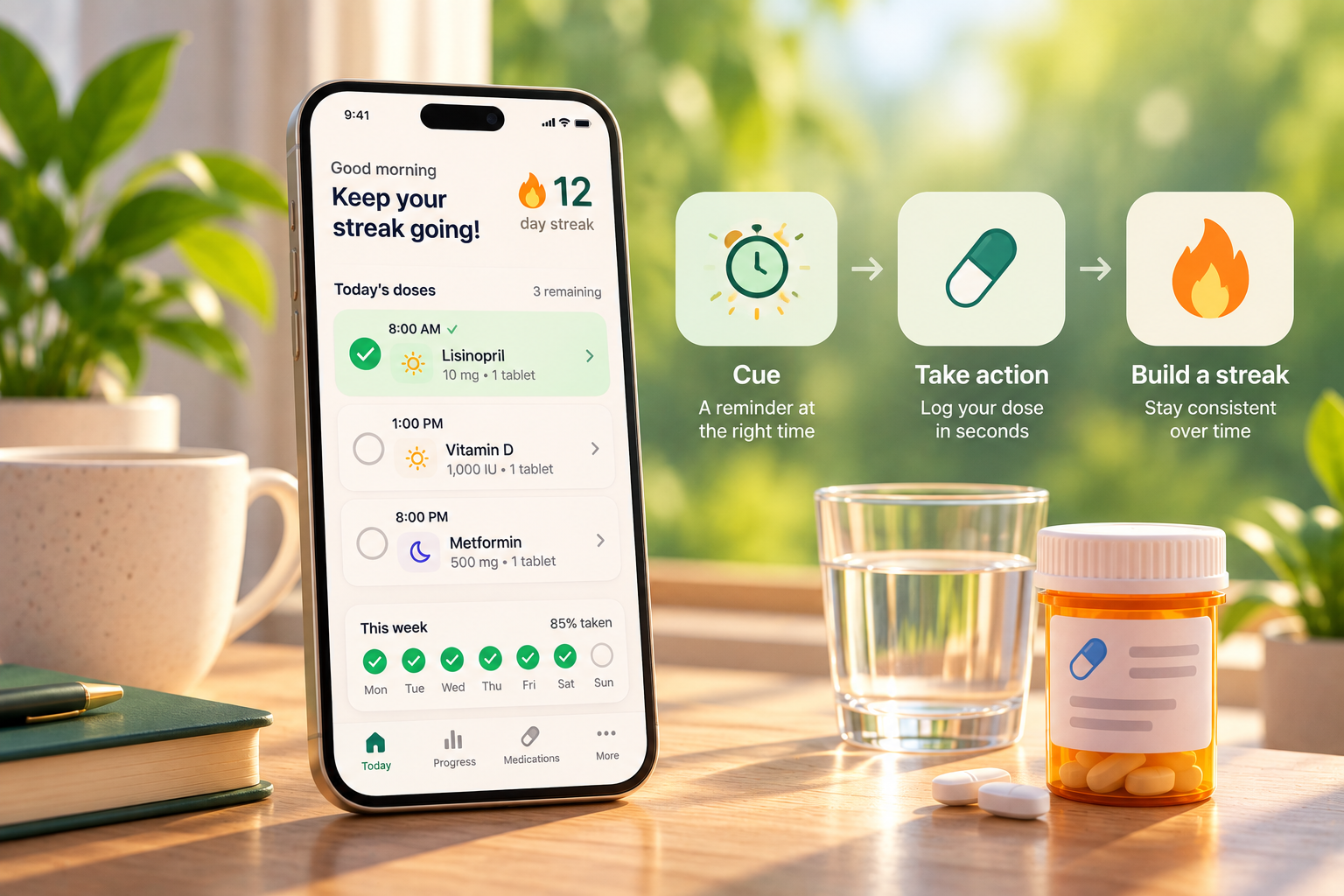
How to Build Healthy Habits That Actually Last
Most health habits fail for the same handful of reasons. Understanding them is most of the work of fixing them.
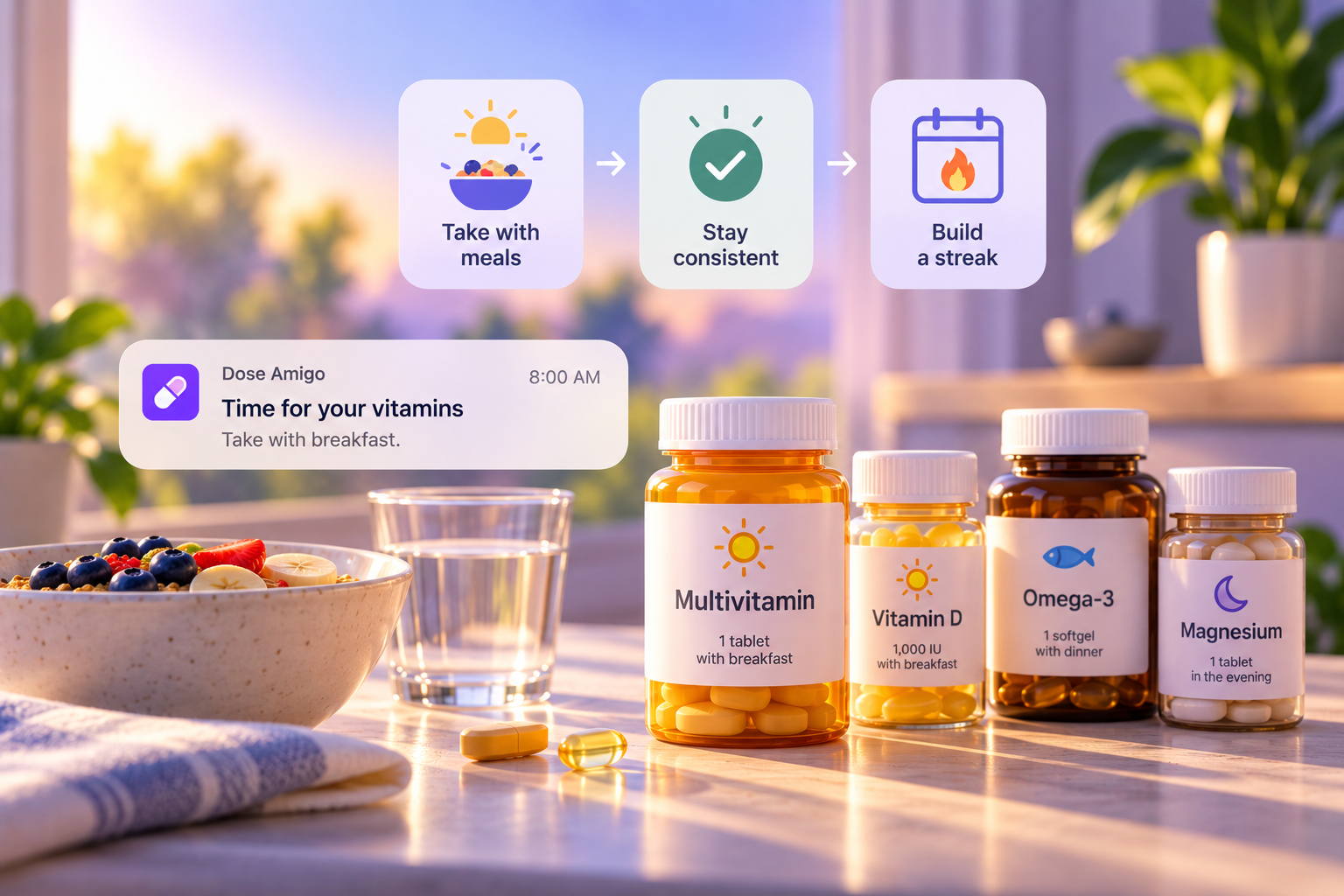
Vitamin Reminder Guide: Building a Routine That Sticks
Vitamins rarely come with the same urgency as a prescription — which is exactly why they are the easiest routine to let slide.
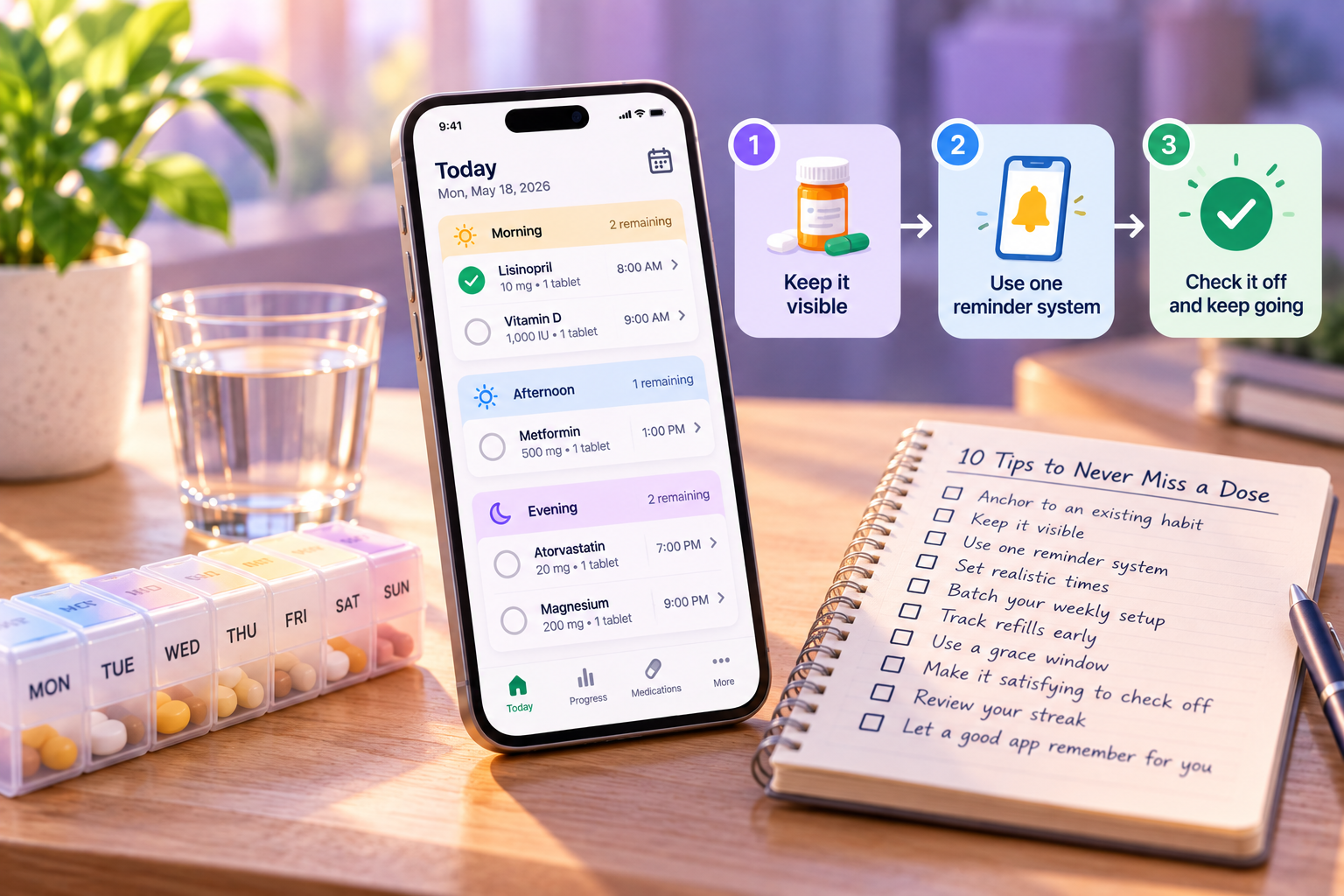
10 Tips to Never Miss a Dose
You do not need more willpower to stay consistent — you need better defaults. These ten small changes make missing a dose the exception instead of the rule.